
Shares of Adani Green Energy (AGEL) continued their upward movement, hitting a new high of Rs 1,955.90, up 2.6 per cent on the BSE in Wednesday's intra-day trade in an otherwise weak market. The S&P BSE Sensex was down 0.77 per cent at 60,285 at 11:01 am. In the past 14 trading sessions, the stock of the renewable energy arm of the diversified Adani Group has zoomed 50 per cent from Rs 1,307.05 on December 30, 2021. In comparison, the S&P BSE Sensex was up 4.3 per cent during the same period.

The BSE Sensex slumped 456 points on Wednesday, tracking losses in index majors Reliance Industries, Infosys and ICICI Bank as market participants continued to book profits at high levels.

The 13 firms under consideration had nearly a million employees as of March 2018, including contractual and temporary workforce.


Ajit Mishra, vice president, research, Religare Broking, answers your stockmarket queries.

The Tata group companies are now more valuable than all the listed central public sector undertakings (CPSUs) or companies in the country. The key 20 listed Tata companies ended the 2021 calendar year with a combined market capitalisation of Rs 23.36 trillion, ahead of the 70 listed CPSUs, which had a combined m-cap of Rs 23.2 trillion. In comparison, these CPSUs had a combined market capitalisation of Rs 16.7 trillion at the end of December 2020 against the Tata group firms' combined m-cap of Rs 15.7 trillion.

Investors' wealth on Tuesday jumped by over Rs 2.51 lakh crore, in tandem with a sharp recovery in equities after four days of heavy declines. The 30-share BSE Sensex opened on a weak note and tumbled 581.93 points or 1.10 per cent to 52,260.82 during the day amid firming oil prices and relentless selling by foreign institutional investors. Amid bouts of volatility, the benchmark touched a high of 53,484.26 and a low of 52,260.82 during the trade. It finally settled at 53,424.09, higher by 581.34 points or 1.10 per cent.

The 30-share Sensex and the 50-share Nifty ended flat at the mark of 29,008 and 8,767 respectively.

After a turnaround in performance by Indian equity markets since July that has seen the S&P BSE Sensex and the Nifty50 wipe out the year-to-date losses, analysts suggest investors start nibbling into stocks that are focused on the domestic economy. While they say intermittent corrections, led by policies of global central banks and other economic data, cannot be ruled out, analysts expect India's relative outperformance among global equity markets to continue as it looks better placed with a healthy economic recovery, and remains one of the fastest growing major economies. In this backdrop, Neeraj Chadawar, head of quantitative equity strategy at Axis Securities, believes that amid global slowdown, aggressive tightening by the central banks, and preference for domestic interests first (by the local government), export-oriented themes are likely to be muted or will deliver conservative returns in the near-term.

Global trends, WPI inflation data for April and the ongoing quarterly earnings of corporates would be the major driving factors for the stock markets, analysts said. Investors would also keep a tab on the movement of foreign institutional investors who are on a selling spree in the domestic equity market for the past many days. "Inflation concern and monetary tightening across the globe are key concerns for the equity markets. "Equity markets are under the strong grip of bears however they look extremely oversold and due for a pullback rally.

Investors' wealth has eroded by over Rs 6.15 lakh crore in three days of market decline amid weak global cues and persistent selling by foreign funds. The BSE benchmark Sensex tumbled for the third straight session on Friday to close at 59,306.93, down 677.77 points or 1.13 per cent. In three days, the 30-share index has lost 2,043.33 points or 3.33 per cent.

Investors' wealth eroded by a massive Rs 8,21,666.77 crore on Monday as the market saw a massive sell-off not seen in many months. The BSE benchmark Sensex plunged 1,170.12 points or 1.96 per cent to close at 58,465.89. This is the worst single-day drop for the gauge in over seven months. This was also the fourth straight session of decline for the Sensex.

Investors have gained Rs 335,770.71 crore in two days of market rally, with the Sensex scaling its fresh lifetime peak on Wednesday. Rising for the second day, the 30-share BSE benchmark jumped 476.11 points or 0.82 per cent to close at its new all-time high of 58,723.20. During the day, it gained 529.97 points to 58,777.06, its intra-day record.

Tata Steel was the top loser in the Sensex pack, sinking over 5 per cent, followed by SBI, IndusInd Bank, Bajaj Finance, HDFC Bank and NTPC. NSE Nifty tanked 371 points to 16,614.20.
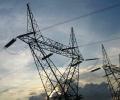
The statement comes in the wake of reports that warned of power crisis looming large due to the coal shortage in the country.

Investors have lost over Rs 5.55 lakh crore in four days of declines in the domestic equity markets. Rising domestic COVID-19 cases and selling in RIL and banking stocks dragged down the 30-share BSE Sensex by 562.34 points or 1.12 per cent to 49,801.62 on Wednesday. In four days, the benchamark has fallen by 1,477.89 points or 2.88 per cent. The market capitalisation of BSE-listed companies has tanked by Rs 5,55,400.52 crore in four days to reach Rs 2,03,71,252.94 crore.

Banks and companies in India are taking a cautious approach towards Sri Lanka, which, reeling from a financial crisis, has sought a $1-billion loan from the country to import essential commodities. A senior State Bank of India (SBI) executive said the bank was committed (to Sri Lanka) for the long term. "As far as exposures (are concerned), the bank will be cautious on its dollar exposure to Sri Lankan entities till the situation improves," he said.

From the 30-share pack, 24 companies fell, with Yes Bank emerging as the top loser, dropping 8.36 per cent, followed by NTPC, M&M and Vedanta.

Investor wealth has jumped by over Rs 12.31 lakh crore in three days, taking the market capitalisation of all BSE-listed companies to a record Rs 198.43 lakh crore on Wednesday as equities continued their Budget-driven rally. The BSE benchmark Sensex closed above the historic 50,000 mark for the first time ever on Wednesday. The 30-share benchmark closed with a gain of 458.03 points or 0.92 per cent at 50,255.75. During the day, it zoomed 728.67 points to its lifetime high of 50,526.39. In three trading days, the benchmark has gained 3,969.98 points or 8.57 per cent.

Investors' wealth tumbled by over Rs 7.35 lakh crore on Friday, with the BSE benchmark Sensex plummeting 1,688 points amid a global selloff triggered by a new coronavirus variant. The 30-share index tumbled 1,687.94 points or 2.87 per cent to close at 57,107.15. During the day, it tanked 1,801.2 points or 3.06 per cent. Tracking the weak trend, the market capitalisation of BSE-listed companies slumped by Rs 7,35,781.63 crore to reach Rs 2,58,31,172.25 crore.

Titan was the top gainer in the Sensex pack, rising around 4 per cent, followed by HDFC, Nestle India, IndusInd Bank, UltraTech Cement and Bharti Airtel. On the other hand, Bajaj Auto, Tata Steel and NTPC were the laggards.

Billionaire Gautam Adani on Tuesday did an hour-long session of yoga exercises in the open air as he led corporate India to join the International Day of Yoga celebrations. Several public and private sector companies held yoga sessions at their offices to promote the adoption of exercise in daily routines to stay fit and healthy. Adani, chairman of logistics-to-energy conglomerate Adani Group, and his wife Priti, who heads the Adani Foundation, "participated with more than 1,000 members of the Adani Parivaar team to celebrate health, mindfulness and meditation," the group said in a statement. The session was held at a football ground at Adani Shantigram in Ahmedabad. Several other business leaders tweeted pictures of their yoga sessions.

Some of the top indebted companies likely to face financial headwinds in the coming quarters include NTPC, PowerGrid, Tata Steel, Adani Power, JSW Steel, UPL, and Steel Authority of India. Together these 201 companies owed Rs 14.9 trillion to their lenders at the end of September 30, 2019, up 4.1 per cent year-on-year (YoY) during the first half of FY20.

ONGC was the top gainer in the Sensex pack, rallying around 6 per cent, followed by IndusInd Bank, L&T, UltraTech Cement, Titan, SBI and NTPC. NSE Nifty settled 32.10 points up at 14,707.80.

Foreign portfolio investors (FPIs) who invest from Mauritius into Indian companies that dole out bonus debentures will get impacted by the tax avoidance provisions on bonus stripping. The FY23 Budget has extended these provisions - applicable only to MFs, so far - to shares and units of REITs, InvITs and AIFs. The move will especially affect large institutional investors who sell original units within nine months after the record date because the loss arising from sale of original units would have to be ignored for the purposes of computing taxable income and cannot be set off against any other capital gain.
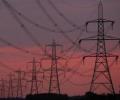
However, the budget lacked very specific measures detailing how this will be achieved," the statement said.

Equity benchmark Sensex ended marginally higher after a choppy session on Friday as concerns over the economic impact of the second wave of Covid-19 and pace of vaccination weighed on investor sentiment.

Ajit Mishra, vice president, Research, Religare Broking, answers your queries.
National Thermal Power Corporation Ltd's scrip was on Friday listed on the Bombay Stock Exchange and the first trade was struck at Rs 70, at premium to the issue price.

The Supreme Court ordered state-run power producer NTPC on Friday not to disconnect power supplies to distribution companies in the capital New Delhi until March 26, averting a potential blackout next week.

India always faces a Hobson's choice as far as feeding coal-fired generators goes - even if the government is reluctant to admit it. The country cannot do without shipping in the world's most polluting fuel from overseas. And it will continue to do so unless it decides to reduce demand by forcing citizens, farmers and businesses to live without electricity for part of the day, or use diesel generators to fire facilities.

After swinging nearly 330 points, BSE Sensex finished 172.69 points or 0.43 per cent higher at 40,412.57. Similarly, the 50-scrip NSE Nifty appreciated 53.35 points or 0.45 per cent to close at 11,910.15.
State-owned National Thermal Power Corporation said on Tuesday that it received 13 bids, including 11 from overseas companies, for constructing the main dam for its 800 MW hydropower project.
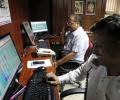
SBI was the top gainer in the Sensex pack, surging around 8 per cent. Tata Steel, Bajaj Finance, HDFC Bank, NTPC, Axis Bank and ICICI Bank also ended with firm gains. On the other hand, TCS, HUL, Bajaj Auto and Infosys were among the laggards.
Bharti Airtel was the top gainer in the Sensex pack, rallying around 11 per cent, followed by ONGC, UltraTech Cement, ITC, PowerGrid and NTPC. On the other hand, IndusInd Bank, Reliance Industries, L&T and SBI were among the laggards.
Tata Steel was the top gainer in the Sensex pack, zooming 7.57 per cent, followed by Sun Pharma, IndusInd Bank, L&T, ITC and HCL Tech.

India's traditional companies are now moving full scale into the renewable and alternative energy space that had been dominated by smaller players over the past decade. Companies such as government-owned NTPC and the Adani and the Tata groups restructured their businesses well in time to become major players in the green space. At the same time, other conventional companies, such as Larsen & Toubro and Reliance Industries Ltd (RIL), which have a presence both in the energy sector as well as myriad other activities - construction, technology and retailing - are tying up with new-age companies to hitch a ride to a greener path.

The "load shedding", which entails compulsory power cuts in select areas, will be carried out both in urban and rural areas, the Maharashtra State Electricity Distribution Company said in a statement.
